

 Guide
Symptom guide
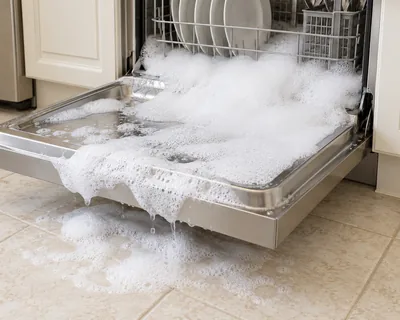
Too Many Suds in a Dishwasher: Detergent and Safe Cleanup
Foam needs a product and model check. Stop adding chemicals, distinguish LG bE from Samsung’s button code and address…
Too much water in the wrong place or too little in the tub: both problems live on the same short path from the shut-off valve to the drain. How to trace it, what owners can check and where service begins.
By ApplianceCodeHQ Editorial Updated
A dishwasher’s plumbing is short and simple. Water comes from a shut-off valve under the sink, through a supply line to an inlet valve, into the tub until a level control says stop, is sprayed around, and leaves through a pump and a drain hose that loops up under the counter. Almost every leak and almost every fill problem happens at one point of that path. So rather than trying random fixes, follow the water in order. It also explains why a leak and a no-fill complaint are closer than they seem: a stuck float can cause either, and a drain hose that siphons can empty the tub as fast as it fills.
Whirlpool’s first check for a dishwasher that will not fill is the plainest one: the supply valve must be fully open. Valves get turned off during other plumbing work and forgotten, or are opened only partway. Samsung’s installation requirements show what the dishwasher expects at that point: hot water at 120 to 149 °F and pressure between 20 and 120 psi. Below 20 psi, Samsung warns, the supply valve may fail and not shut off properly. That is a fill problem and an overfill problem in one sentence. Samsung also recommends keeping the shut-off valve easy to reach, checking the hose connection for leaks, and closing the valve if the dishwasher will stand unused for a week or longer.
Many dishwashers have a small float in the tub, often near a front corner, that rises with the water and stops the fill. If it is stuck down by debris, the dishwasher may not fill or may show a fill error; if it is stuck up, it may fill too much and leak. Whirlpool asks owners to check that the float moves up and down freely and to clean it and its well. GE notes that most of its 2015-and-newer models have a flood float the owner can check, while older models need service for float problems. If you cannot find a float, do not dismantle anything to look for it: your model may use a different design.
Most leaks people actually see appear at the door. Whirlpool lists the gasket first: look for cracks, tears, flattened areas or food residue on the rubber seal, and clean the gasket channel with a mild cleaner. Then the loading: a pan handle or utensil that stops the door from closing squarely, or an item that blocks a spray arm and redirects water at the door. Detergent matters too. Use only dishwasher detergent, never hand dish soap; suds from the wrong product push water out past the seal. Our guide to too many suds explains the cleanup.
| Symptom | Owner check | Service if |
|---|---|---|
| Drips at the door edge | Gasket condition, door blocked, detergent type, level | Leak continues after gasket and leveling |
| Pool under the front center | Overfill: float moves freely, filter clean | Overfill persists; seals or pump suspected |
| Wet cabinet floor at the back | Supply and drain connections, clamps, hoses | Inlet valve or internal hose leaks |
| No water enters at all | Valve open, door latched, cycle resumed, filter and drain clear | Still no fill after the checks |
| Fills, then drains, then fills | Drain hose loop height, siphoning | Loop correct but cycle repeats |
| Leak or fill code on the display | Read the code page for your brand | As the code page says |
A dishwasher that tilts forward or to one side lets water reach the door seal at the wrong angle, and its door may not close squarely. Whirlpool recommends checking level side to side and front to back and adjusting the feet so the door closes evenly. If the door does not latch, many dishwashers simply will not start filling. Whirlpool also describes a resume step: if the door was opened during a cycle or power was interrupted, the Start/Resume indicator flashes, and you press Start/Resume and close the door within 3 seconds.
It surprises people that a drain problem can stop a fill, but GE says exactly that: resolve draining first, then look at filling. Clean the removable filters, and if water is standing in the tub, follow the not-draining guide. The drain hose shape matters as well. Whirlpool states that the hose loop should be at least 20 inches above the floor, connected to the waste tee or disposer inlet above the drain trap; a lower loop lets the dishwasher siphon water out while it fills. Also check the connections and clamps under the sink, and the air gap on the countertop if your installation has one.
After a brand-new installation, GE suggests pouring about a quart of water into the tub to lubricate the pump seals and running the dishwasher for up to 10 minutes before deciding it does not fill. On older models with a turn-to-start knob, GE notes a delay of up to 3 minutes before the water valve opens is normal; turning the knob too far can skip the first fill.
Check the supply valve, the door latch and the float first. If those are fine, a technician should check the inlet valve and controls.
Many dishwashers keep a small amount of water in the sump. A tub that holds standing water above the filter after a cycle is a drain problem.
No. Whirlpool says to use only dishwasher detergent; dish soap foams and can push water out of the door.
Follow the code page for your brand and model; some manufacturers allow owner steps, others require service. Do not tip a built-in dishwasher out of its cabinet.
Sources: the steps, heights and pressures above are taken from Whirlpool, GE and Samsung support documents.
Whirlpool Product Help: Dishwasher Leaking Troubleshooting Guide — checked 2026-11-05.
Whirlpool Product Help: Will Not Fill With Water — checked 2026-11-05.
GE Appliances: Dishwasher - Not Filling with Water — checked 2026-11-05.
Samsung US: Dishwasher water supply requirements — checked 2026-11-05.
Clear the drain path first: the sink, the hose and the filter.
Guide
Symptom guide
Foam needs a product and model check. Stop adding chemicals, distinguish LG bE from Samsung’s button code and address…
 Guide
Symptom guide
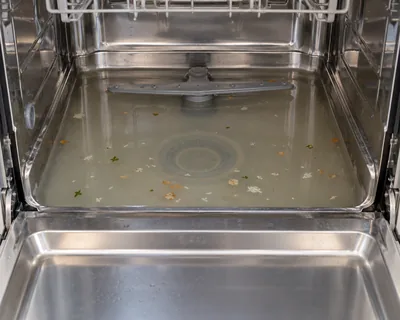
Use the drain code and model manual to check a dishwasher’s sink connection, visible hose and removable filter without…
 Guide
Symptom guide
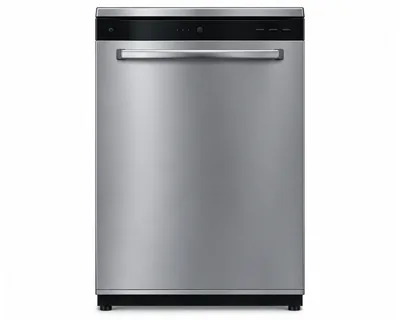
Separate a dark control panel from a powered dishwasher that will not begin a wash. Preserve codes, check normal door…
 Error code
Bosch dishwasher · E15
Water in the base — leak protection is on.
Call a pro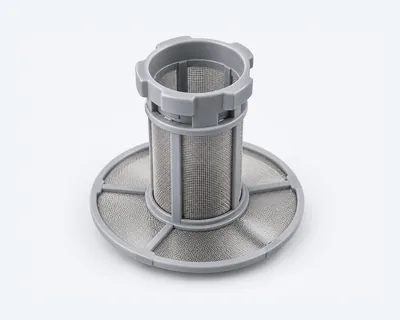 Error code
Bosch dishwasher · E24
Drain error — the drain hose is kinked or the filters are blocked.
Easy fix · 15–30 min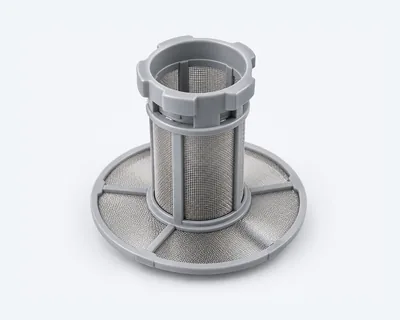 Error code
Bosch dishwasher · E25
Drain pump blocked, or the pump cover is loose.
ModerateThank you! Your feedback helps us make this page better.
Could not send. Please try again.