

 Guide
Symptom guide
Washer and Dryer in an Unheated Garage: Freeze Damage and What the Manuals Actually Require
A washer never drains completely, and the water left in its pump, valves and hoses is what a cold garage night breaks.…
A washer that walks across the floor and a washer that leaves a puddle often share a cause: installation. Where to look first, how to read the location of the water, and when the problem is inside the machine.
By ApplianceCodeHQ Editorial Updated
Leaks and violent shaking look like two different problems, but on a washer they often start in the same place: the installation. A machine that is not level rocks on spin, and the same rocking strains hoses and lets water slosh past the door. A drain hose pushed too far into the pipe can siphon water out and onto the floor. So before you suspect a pump or a bearing, it pays to work through the setup in a fixed order: what was supposed to be removed, what should be level, what goes in the drum, and where the water connects. Work through it in that order, and let the location of any puddle narrow the search.
On a front-load washer that shakes hard from the very first spin, the usual suspect is the shipping bolts. They lock the drum for transport and are not meant to stay in. Samsung and LG both describe the same quick test: open the door and push the drum. It should give a little, as if it sits on springs. If it feels solid, the bolts are still installed. Samsung notes that front loaders may have three or four bolts (seven on its FlexWash models) and that top loaders have none. LG adds a second item: on some models a shipping foam block stays wedged under the tub. Finding it means tilting the washer back, which is a two-person job; remove the block if it is there. Keep the bolts for any future move and fill the holes with the caps from the accessory pack.
Whirlpool’s check is simple: grip the top and rock the washer front to back, then side to side. It should not wobble, and all four feet should touch the floor. If one corner rocks, Samsung advises shortening the other legs first and lengthening the wobbly one only if the others are already as short as they go. Keep the legs as short as possible and tighten the lock nuts afterward; a loose nut lets the foot creep out of adjustment within a few loads. Samsung also asks for about an inch of space between the washer, the dryer and the wall, so that the cabinet does not knock against its neighbors.
The floor matters as much as the feet. A washer on a flexible wooden floor, on carpet or on a pedestal will move more than one on a solid slab. Samsung says carpet and soft surfaces can cause some vibration and that a pedestal must be leveled before the washer goes on top; even then some vibration is expected. Whirlpool suggests reinforcing a floor that is not solid or using a vibration pad.
A balanced drum spins quietly; an unbalanced one bangs. The common offenders are single heavy items, comforters and bedding that tangle into one lump, and, surprisingly, very small loads. Samsung explains that a small load can pile up on one side and suggests adding items or lowering the spin speed. LG recommends loading the tub to about two-thirds of its capacity so the laundry can move freely, and Whirlpool asks for a balanced mix of items rather than a tightly packed drum. Some items simply do not belong in a home washer: Samsung lists floor mats and pillows among them. If your washer shows an unbalance code, the code pages for LG UE and Samsung Ub explain the machine’s own response.
| Where water appears | Check first | Notes |
|---|---|---|
| Front, under the door | Door gasket for hair, lint or small items; door fully closed | A few drops when you open the door are normal; a leak with the door closed is not |
| Front, near the dispenser | Detergent type and dose; drawer fully closed | Too much or non-HE detergent creates suds that push water out |
| Back of the washer | Fill hoses, washers and O-rings at both ends | Replace damaged hoses rather than tightening harder |
| Around the drain pipe | Drain hose depth, height, kinks, airtight fit | Deeper than 8 inches siphons; too shallow can pop out |
| Bottom front, behind a panel | Pump filter cap and seal (front loaders) | Samsung: clean at least monthly or every 40 washes |
| Underneath, no clear source | Stop using it | An internal leak is a service job |
Samsung’s leak checklist starts with the fill hoses: inspect the rubber and both ends of each connection, including the O-rings, and replace anything cracked or bulging. Then the drain hose, which causes more leaks than people expect. Samsung puts it 6 to 8 inches into the drain pipe: deeper causes siphoning, shallower lets it pop out during a forceful drain. It should not form an airtight seal with the pipe, should be free of kinks, and should sit within the height range in the installation instructions (Samsung gives 18 to 96 inches for a standard drain and 24 to 35 inches for a sink). Samsung also says not to use a drain hose extension kit and not to remove the hose holder clamp on the back, because, according to Samsung, removing it can trigger an LC or 4C error.
Excess or non-HE detergent creates foam that finds its way past the door and drawer. Use HE detergent below the MAX line and run empty cycles until no suds appear if you suspect residue; our guide to too many suds goes deeper. Fold back the door gasket on a front loader and look for debris: Samsung notes that even a single strand of hair can cause a leak. Finally, check that the pump filter cap is seated properly after cleaning.
Fix the most likely cause from the steps above before moving to the next.
Samsung and LG both suggest Rinse & Spin with a small load and watching the spin and drain.
Some Samsung washers have a calibration routine after moving or leveling; see the calibration guide.
Where the water appeared, at which stage, and any code on the display.
If shaking or leaking continues after the owner checks, or the water comes from inside the cabinet.
Check the shipping bolts and, on some LG models, the foam block under the tub before anything else. Left in place they cause severe vibration.
Yes, especially on a pedestal, on carpet or on a wooden floor. Rocking, banging or walking across the floor is not.
Intermittent leaks often follow the load or the cycle: foam on heavy-detergent loads, siphoning during drain, or a gasket that leaks only when debris is caught in it.
Samsung advises against extension kits. Follow the installation instructions for your model.
Sources: the checks and measurements above come from the manufacturers’ US support pages, not from our own testing.
Samsung US: Samsung washing machine is leaking — checked 2026-11-05.
Samsung US: Samsung washing machine is shaking too much — checked 2026-11-05.
LG US: Washer vibration issues — checked 2026-11-05.
Whirlpool Product Help: Washer is Vibrating, Walking or Moving — checked 2026-11-05.
If the washer refuses to spin at all, the load, the drain and the door lock are the next places to look.
Guide
Symptom guide
A washer never drains completely, and the water left in its pump, valves and hoses is what a cold garage night breaks.…
 Guide
Symptom guide
Separate a drain problem, an unbalanced load and a door warning before treating a washer that will not spin as a…
Guide
Symptom guide
Use Samsung washer calibration with an empty tub and model-specific controls. Cb/C6 is a calibration status, while…
 Guide
Symptom guide
Compare LG Sud, Samsung SUd and Whirlpool Sud/Sd without assuming the same pause, cleaning cycle or dispenser…
 Error code
LG washer · UE
Unbalanced load — the drum can't spin evenly.
Easy fix · 10–20 min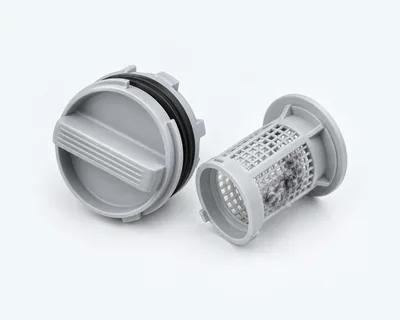 Error code
Thank you! Your feedback helps us make this page better.
Could not send. Please try again.