

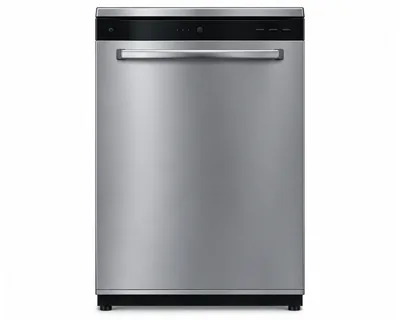
 Guide
Symptom guide
Dishwasher Leaking or Not Filling: Follow the Water From the Valve to the Drain
Too much water in the wrong place or too little in the tub: both problems live on the same short path from the…
Cloudy glasses and a chalky tub are often a water problem, not a dishwasher fault. How to tell hard-water film from permanent etching, and how rinse aid, detergent and softener settings fit together.
By ApplianceCodeHQ Editorial Updated
Few dishwasher complaints are as common, or as often misdiagnosed, as cloudy glasses and a white film on plates. Owners clean the filter, change detergent and run the empty machine twice before suspecting the water. In many homes, the water is the cause. This guide helps you work out whether you are seeing removable hard-water film or permanent glass damage, and how detergent, rinse aid and any softener setting work together so that the next load comes out clear.
Hardness is the amount of dissolved calcium and magnesium in the water. The U.S. Geological Survey classifies it in milligrams per liter as calcium carbonate: soft water is 0 to 60, moderately hard 61 to 120, hard 121 to 180 and very hard above 180. Many US water suppliers also report hardness in grains per gallon, and appliance manuals often use that unit. Your supplier’s annual water-quality report normally lists it, and a local utility can tell you if it does not.
When hard water is heated, the minerals can come out of solution as calcium carbonate scale. USGS notes that this scale can shorten the life of equipment and raise heating costs. Inside a dishwasher the same chemistry shows up in three places: a chalky coating on the tub and spray arms, a cloudy film on glassware as the water dries, and detergent that rinses less cleanly because the minerals compete with it.
The two look alike from across the kitchen but are different problems. Samsung’s troubleshooting page gives a simple test: wipe a cloudy glass with lemon juice or distilled white vinegar. If the haze comes off, it is mineral film caused by hard water. If it does not come off, it is etching, and Samsung states plainly that etching is permanent and cannot be reversed. The glass has been physically roughened, so the only remedy is prevention.
| Observation | Likely meaning | Next step |
|---|---|---|
| Haze wipes off with vinegar | Hard-water film | Rinse aid, better detergent, clean the machine |
| Haze stays after vinegar, glass feels rough or rainbow-tinted | Etching | Stop the cause; the glass cannot be restored |
| White crust on tub, door seal or spray arms | Scale | Clean the interior; check hardness and rinse aid |
| Spots only on one rack | Likely loading or spray pattern | See the dishwasher-not-cleaning guide |
Whirlpool’s support page says the use of rinse aid is very important: it improves drying and helps control hard-water deposits, and heated drying with rinse aid gives the best drying results. Samsung says its dishwashers are designed for use with rinse aid and will run without it, but not at their best. Check the dispenser if films return, because the reservoir empties over weeks and the dishwasher does not always say so loudly.
Whirlpool reports that quality tablets and packs have been proven better than powder, liquid or gel detergents at reducing filming on dishes. It adds two cautions: some packs do not include rinse aid, so you may still need to add it separately, and detergent should be stored tightly sealed in a cool, dry place, because stale detergent also leaves a film. Use only automatic dishwasher detergent.
It seems logical that if hard water causes film, softening the water as far as possible is the cure. Samsung warns against it: the water should not be softer than 7 grains per gallon, and too much detergent, too much hot water or the use of softeners can cause etching. Its advice for avoiding etching includes limiting or avoiding soft water and softeners for the dishwasher. At the other extreme, Whirlpool describes extremely hard water of 15 grains per gallon or more as capable of damaging the dishwasher and recommends a softener. The practical target is the middle: know your number, reduce the extremes, and then use the correct dose of detergent and rinse aid for that water.
Many dishwashers have a built-in softener or hardness setting that you set to match your supply. The button sequences differ widely between brands and models, so use the exact manual for your model instead of copying a sequence from another brand.
Use affresh dishwasher cleaner, a white vinegar rinse or another dishwasher cleaning product. Whirlpool notes that severe spotting may need more than one treatment.
Samsung suggests one cup of distilled white vinegar on the upper rack and a hot water cycle, about once a month in hard-water homes.
A clogged filter makes any film worse. See the filter-cleaning guide for each brand’s steps.
Check the reservoir and the setting.
Wipe a glass with vinegar after the next cycle to see whether you are dealing with film or etching.
The cited pages treat film as a cleaning and appearance problem and give no health warning about it. Etching is a physical change to the glass.
Ask your water utility or read its annual water-quality report; some dishwasher manuals also include a test strip. Convert units if needed: the report may use mg/L or grains per gallon.
It reduces hardness, but Samsung warns about going too soft for a dishwasher; keep within the range in your dishwasher’s manual.
Quality tablets or packs can reduce filming, but a pack without rinse aid may mean you now need to add it separately.
Sources: According to the manufacturer and USGS; independent water testing was not performed.
Whirlpool Product Help: Spotting or Filming on Glassware — checked 2026-11-03.
Samsung US: Dishwasher cycle ends before dishes are clean — checked 2026-11-03.
USGS Water Science School: Hardness of Water — checked 2026-11-03.
Hard water is one cause among several: loading, spray arms, detergent and cycle choice also matter.
Guide
Symptom guide
Too much water in the wrong place or too little in the tub: both problems live on the same short path from the…
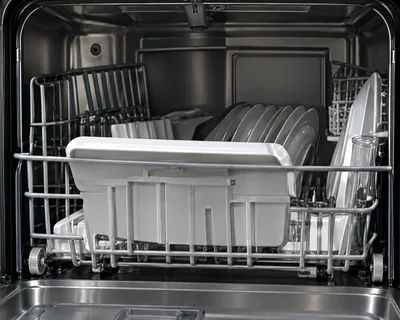 Guide
Symptom guide
Separate an interrupted wash from food residue, an unopened detergent cup or white film. Use safe loading and…
 Guide
Symptom guide
Wet dishes do not identify a failed heater. Check whether the wash finished, which drying system your model uses and…
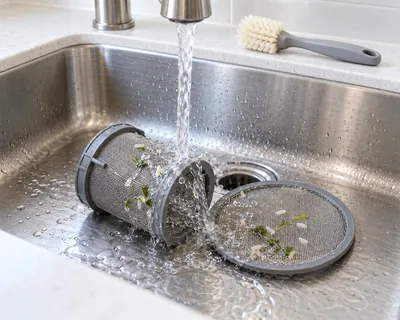 Guide
Symptom guide
A clogged filter causes filter and drain codes, poor cleaning and odors. How Bosch, LG and Samsung filters come out, how…
 Error code
Bosch dishwasher · E15
Water in the base — leak protection is on.
Call a pro Error code
Bosch dishwasher · E24
Drain error — the drain hose is kinked or the filters are blocked.
Easy fix · 15–30 minThank you! Your feedback helps us make this page better.
Could not send. Please try again.