

 Guide
Symptom guide
How to Clean a Dryer Vent Safely
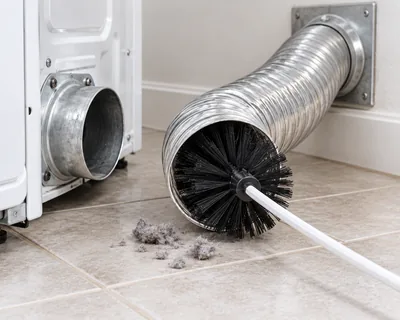
Lint in the filter and the exhaust duct is the leading factor in home dryer fires. What owners can clean, how often,…
A burning smell from a dryer can be harmless shipping oil or the first sign of a lint fire. How to tell which, what to do in the first minute, and the checks that lower the risk without opening the machine.
By ApplianceCodeHQ Editorial Updated
A dryer combines heat, moving air and a steady supply of fine, dry fuel: lint. Most of the time those stay in balance, which is why a burning smell deserves a calm but quick decision rather than a wait-and-see. Some smells are expected, such as the oil burning off a brand-new dryer. Others are the dryer telling you that air is not getting out and heat is building up. And a few mean you should stop reading and act. Those come first below; after them, sort the rest by the smell itself and by what the dryer is doing.
The U.S. Fire Administration, citing national fire incident reports for 2018 to 2020, names failure to clean as the leading factor in home clothes dryer fires, at 31 percent. That is the core of the problem: lint escapes the filter in small amounts every load and settles in the duct, the vent hood and inside the cabinet. As it builds up, the hot air leaves more slowly, drying takes longer, the dryer runs hotter, and the lint itself sits closer to the heat. A dryer that suddenly takes two cycles to dry towels is giving you the same warning as a faint scorched smell, just more quietly.
| Smell and situation | Likely cause | What to do |
|---|---|---|
| Hot, oily smell on a brand-new dryer | Shipping oil burning off | Samsung: run it empty for about 15 minutes |
| Scorched smell, long drying times | Lint in the filter, duct or vent hood | Stop, let it cool, clean the filter and check the vent |
| Burnt fabric smell after one load | Heat setting too high for synthetics or rayon | Use the setting on the care label; clean the drum |
| Electrical or hot plastic smell | Possible electrical fault | Breaker off, request service |
| Musty or sour smell | Laundry left wet, a dirty washer or sulfur in the water | Fix the source; Samsung says no service is needed |
| Dead-animal smell | An animal in the exhaust vent | Clear it and fit a proper vent cover |
You do not need a thermometer to notice overheating. The top or sides of the cabinet feel much hotter than usual, clothes come out too hot to handle but still damp, the laundry room gets warm and humid, the outside vent flap barely moves while the dryer runs, or the dryer stops mid-cycle and shows a heat or vent message. Several dryers report restricted airflow directly: LG’s d80 family of codes describes a partly blocked exhaust, Samsung’s HC code is a heating warning, and some Samsung models offer a vent test. Treat any of those as a reason to inspect the exhaust path before the next load, not as a nuisance to clear.
Wait until the drum and cabinet are cool. On a gas dryer, also follow the manual before moving it.
Every load, before or after. If the manual describes washing the screen from time to time, do that too and let it dry fully before refitting.
With the dryer running on air or low heat, the outdoor flap should open and you should feel strong airflow.
Look for crushed, kinked or very long runs, and plastic or foil ducting; our vent-cleaning guide covers materials and cleaning.
Use the right heat for the fabric and follow care labels for foam, rubber or items with flammable stains.
Samsung’s guidance is clear: if a burning smell continues after the new-dryer run, the lint and vent cleaning and the setting check, turn the dryer off at the circuit breaker and request service. The same applies straight away to any electrical smell. Lint that has collected inside the cabinet, near the heater or burner, is not an owner job; the appliance needs to be opened, and gas and high-voltage parts are involved. Tell the technician what you smelled, when it started, how long drying now takes, and any code you saw.
Clean the filter before or after every load. Do not leave the dryer running when you go to bed or leave home, especially after you have noticed long drying times. Keep the area around the dryer clear of boxes, laundry piles and cleaning products. Have the vent run checked and cleaned regularly; how often depends on its length and how much you dry, and long or complicated runs need attention sooner. A working smoke alarm near the laundry area is part of the same plan.
Samsung explains that new dryers can smell of burning shipping oil and suggests an empty run of about 15 minutes. If the smell continues after that, request service.
Not until you have cleaned the filter and checked the vent. A faint scorched smell is often the earliest sign of restricted airflow.
No. Samsung attributes mildew smells to the laundry, the washer or the water, not to the dryer.
Lint inside the cabinet sits near the heater or gas burner. Leave it to a qualified technician.
Sources: smell guidance comes from Samsung; the fire statistic is the U.S. Fire Administration’s, based on national fire incident (NFIRS) data.
Samsung US: Samsung dryer smells or smokes — checked 2026-11-05.
U.S. Fire Administration: Appliance and electrical fire safety — checked 2026-11-05.
Warning signs, duct materials and a safe cleaning checklist.
Guide
Symptom guide
Lint in the filter and the exhaust duct is the leading factor in home dryer fires. What owners can clean, how often,…
 Guide
Symptom guide
A dryer that runs longer needs a check of the cycle, load and drying system. Use safe Samsung and LG references before…
 Error code
Samsung dryer · HC
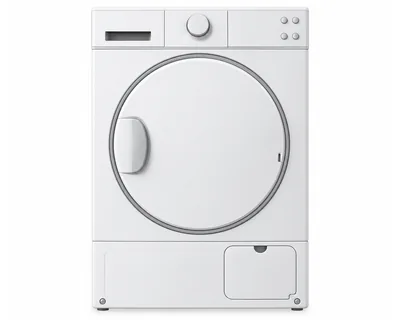
Heating error, generally excessive heat; Samsung also notes a low-voltage exception on electric dryers.
Call a pro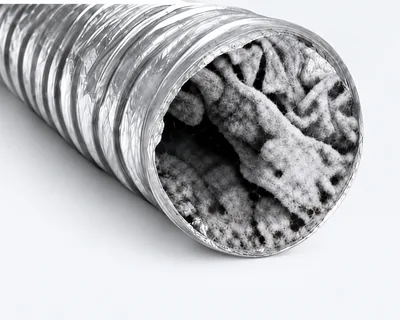 Error code
LG dryer · d80
Exhaust vent about 80% restricted — clean the duct.
Easy fix · 30–60 min
Error code
LG dryer · tE1
Thermistor error — the dryer's temperature sensor reported a problem.
ModerateThank you! Your feedback helps us make this page better.
Could not send. Please try again.