

 Guide
Symptom guide
How to Clean a Dryer Vent Safely
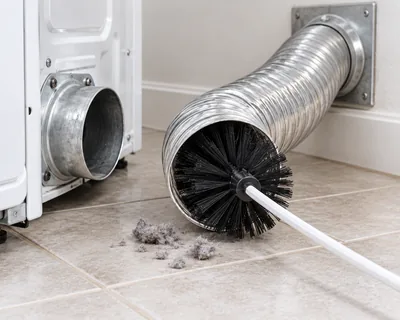
Lint in the filter and the exhaust duct is the leading factor in home dryer fires. What owners can clean, how often,…
Whirlpool dryers report three kinds of trouble: air that cannot get out, heat that cannot be made or measured, and power that never arrived. How to read the Check Vent light, AF, PF, L2 and the F#E# codes, and which ones an owner can actually act on.
By ApplianceCodeHQ Editorial Updated
A Whirlpool dryer has only a few things to worry about: getting hot air through the clothes and out of the house, making that heat, measuring it, and keeping track of how wet the load still is. Almost every message it shows belongs to one of those jobs. The Check Vent light and the AF code mean the air is not leaving fast enough, and the dryer keeps running anyway. PF and L2 are about the electricity that feeds it. The paired F-and-E codes, such as F3 E1 or F4 E1, name a sensor, heater or control that the dryer could not verify, and for those Whirlpool’s owner procedure is short: one power reset, then service if the code comes back. The rest of this guide sorts the codes by that logic so you know which ones you can fix with a brush and which ones you should only report.
Many Whirlpool consoles have two lights that look like housekeeping prompts. Clean Lint Screen is exactly that: a reminder after every load. Check Vent is different. Whirlpool explains that on models that have it, the dryer takes a reading during the sensing phase at the start of an automatic cycle and switches the light on when it detects a blocked vent or low airflow. It stays lit for the rest of that cycle, and it goes out when the cycle ends, when you touch Power or when you open the door. That is why the light seems to “fix itself” and then comes back the next day: clearing it does nothing to the duct, and the next automatic cycle measures the same restriction again.
Displays without the light show the same condition as AF, which Whirlpool also lists as F4 E3, and touching any key returns the screen to the time remaining. In both cases the dryer keeps working. That sounds reassuring, but it is the reason the warning is easy to ignore for months. A restricted vent means longer cycles and a hotter cabinet, and lint that does not leave the duct stays near the heat. Our separate guide to a dryer that smells like burning or runs too hot, linked below, covers what to do if it has already gone that far; this page stays with the codes.
Clean it, and look at whether it was full after a single load. A screen that clogs quickly points to heavy-lint items, not a broken dryer.
Pull the dryer out and look for a crushed or kinked transition duct. Whirlpool recommends 4-inch rigid or flexible metal venting, at least 4 inches of space behind the dryer, and replacing plastic or foil duct.
The exterior hood should be free of lint, nests and landscaping. Its flap should open when the dryer runs.
Run the dryer for 5 to 10 minutes and hold your hand under the outside hood. Whirlpool’s yardstick: if the airflow feels weaker than a hair dryer on high, the whole vent system and hood need cleaning.
Choose a heated Timed Dry cycle and restart. If the message persists, Whirlpool’s next step is to have all the home venting cleaned by a venting specialist.
Two practical notes. Whirlpool suggests cleaning the house venting every one to two years, or sooner if drying has slowed, with pets and heavy-lint loads shortening the interval; its page adds that a vent cleaning service is not covered by the warranty. And if you want a number rather than a feeling, Whirlpool sells a dryer vent test kit, part W11224254, through its customer service. The step-by-step cleaning itself, including what not to put inside a duct, is in our dryer vent cleaning checklist, linked at the end of this page.
| Code | What Whirlpool says it points to | Owner action on the Whirlpool page |
|---|---|---|
| Check Vent light, AF, F4 E3 | Restricted airflow: lint screen or vent clogged, vent crushed, kinked or with too many turns | Airflow checks above; dryer keeps running |
| PF | A power failure interrupted the cycle; also possible after line “noise” or keys pressed during the 10-second power-up delay | Hold Start to resume or press Power to clear; service if it keeps appearing |
| L2, F4 E4 | Low or no line voltage, so the heater cannot turn on while the dryer still tumbles | Check for a tripped breaker; voltage and wiring checks are for a qualified electrician |
| F3 E1 | Exhaust thermistor | One reset, then service if it returns |
| F3 E3 | Inlet thermistor | One reset, then service if it returns |
| F3 E2 | Moisture sensor: five loads in a row without moisture-sensor data | Level the dryer, dry fuller loads or use an automatic cycle, then reset |
| F4 E1 | Heater system: heater or heater relays | One reset, then service if it returns |
| F6 E1 | Communication between the main control, the touchpad and their wiring | One reset, then service if it returns |
| F7 E1 | Motor system: motor, control or wiring | One reset, then service if it returns |
| Any other alternating F# E# | The control has detected a problem that requires service | Note the code and request service |
Read the table as three groups. The airflow line is the only one where the owner does the real work. The power lines, PF and L2, depend on what happened at the breaker panel. The sensor and control lines share one owner procedure, and that is deliberate: a thermistor, heater relay or communication fault cannot be confirmed without measuring parts inside the cabinet, which is work for a technician.
A dryer controls temperature with thermistors, small sensors whose resistance changes with heat. Whirlpool names two of them in its codes: the exhaust thermistor (F3 E1) and the inlet thermistor (F3 E3). If the control cannot read one of them sensibly, it has no way of knowing how hot the air is, so it reports the fault instead of guessing. The moisture sensor code F3 E2 is the odd one out, because it is often not a failure at all. Whirlpool describes it as five consecutive loads dried without moisture-sensor data, and names two everyday causes: a dryer that is not level, so clothes do not tumble across the sensor strips, and very small loads or single items that never touch them. Leveling the cabinet and running a normal-size load on an automatic cycle is the fix it lists before any reset. Whirlpool’s page even warns that the top panel may be curved, so check level on the cabinet edge.
PF only tells you that power was interrupted while a cycle was running. After a storm flicker it is expected, and holding Start resumes the load. Whirlpool also mentions a less obvious trigger: pressing keys during the roughly 10-second delay after the dryer powers up. L2 and F4 E4 describe a condition that is still there; Whirlpool’s overview notes that L2 normally shows up at initial installation, which makes a new hookup or a recently moved dryer the first suspect. Whirlpool explains that an electric dryer uses two breakers on a separate 30-amp circuit, one feeding the motor and one feeding the heater, and needs a 240-volt supply. That matches the symptom Whirlpool describes for L2: the drum keeps turning, but the heater does not come on. Resetting a tripped breaker is an owner step. Anything beyond that, such as the cord connection at the terminal block or the voltage at the outlet, belongs to a qualified electrician; our guide to a dryer that will not heat explains how to tell the electrical cause from an airflow one.
Search results for Whirlpool dryers are full of two-digit codes such as F01, F22, F23 and F28, usually with confident meanings that disagree from one site to the next. The current Whirlpool US dryer code index we checked does not list them; it uses the E-paired format above plus a handful of letter codes. They may belong to older control generations or appear in service documentation, but without a Whirlpool page or an owner’s manual for your model we do not decode them here. If your display shows one, find the model number on the label inside the door opening, look for that model’s Use & Care Guide, and give the exact characters to the service technician rather than a translation from a forum.
For the F#E# codes, Whirlpool’s pages give the same routine: switch the dryer’s breaker or breakers off, wait one minute (five minutes for F1 E1), switch back on, start a timed dry cycle and watch for about a minute. If the code reappears, the instruction is to contact Whirlpool or schedule service; the US line on those pages is 1-866-698-2538. One reset is a test, not a treatment. Repeating it every evening hides a pattern the technician would want to see, so write down the code, the cycle and what you checked before you call.
Whirlpool says the dryer continues to operate, but restricted airflow lengthens drying and affects performance. Treat it as a job for this week, not a light to clear: lint that stays in the duct stays near the heat.
Whirlpool lists vent length and the number of elbows as factors, along with the exterior hood. A long run with several turns can be restrictive even when clean; compare it with the limits in your installation instructions.
Not necessarily. Whirlpool ties it to an unlevel dryer or very small loads first. Level the cabinet and dry a full load on an automatic cycle before booking service.
Whirlpool lists them together as restricted airflow, shown differently depending on the display.
Sources: According to the manufacturer; this is not an independent diagnosis, and code meanings apply to Whirlpool US dryers covered by these pages.
Whirlpool Product Help: AF or "Check Vent" — Dryer — checked 2026-11-05.
Whirlpool Product Help: Check Vent Light on Dryer — checked 2026-11-05.
Whirlpool Product Help: Error Codes in Dryers — checked 2026-11-05.
Whirlpool Product Help: Dryer error code index and code pages — checked 2026-11-05.
Most airflow warnings end with a clean duct and a better hood. Work through the owner checklist before booking a visit.
Guide
Symptom guide
Lint in the filter and the exhaust duct is the leading factor in home dryer fires. What owners can clean, how often,…
 Guide
Symptom guide
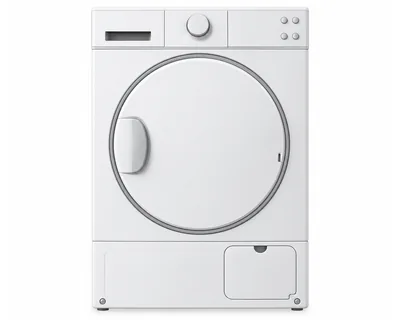
A burning smell from a dryer can be harmless shipping oil or the first sign of a lint fire. How to tell which, what to…
 Guide
Symptom guide
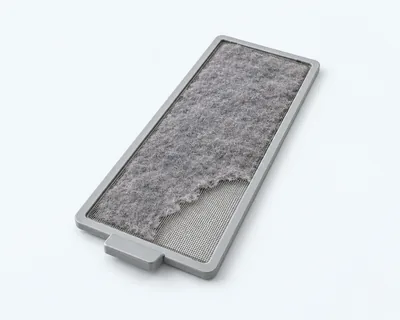
Distinguish no heat from warm but damp clothes, check the model’s cycle settings and accessible lint areas, and leave…
 Error code
LG dryer · d80
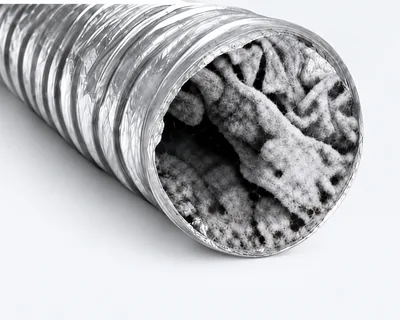
Exhaust vent about 80% restricted — clean the duct.
Easy fix · 30–60 min
Error code
LG dryer · tE1
Thermistor error — the dryer's temperature sensor reported a problem.
Moderate
Error code
LG dryer · PS
Power supply error — improper voltage at the power cord.
Call a proThank you! Your feedback helps us make this page better.
Could not send. Please try again.